
Tree Risk Assessment
people, property, and your legal duty of care — without unnecessary tree removal.
Understanding Tree Risk
Every tree owner and land manager has a duty of care to ensure that trees under their control do not pose an unreasonable risk to people or property. Tree risk assessment is the process by which that duty is properly understood, documented, and acted upon.
However, risk must be understood in context. Not every defect is dangerous, and not every dangerous tree needs to be removed. A professional risk assessment gives you a proportionate, evidence-based picture of the actual level of risk — enabling informed decisions that balance safety obligations with the real value trees provide.
Craig Watkins is a licensed user of the Quantified Tree Risk Assessment (QTRA) system, one of the most rigorous and legally recognised frameworks for tree risk evaluation in the UK.
“A tree risk assessment should reduce unnecessary felling, not increase it. Understanding risk properly means retaining valuable trees wherever the evidence supports it.”
- QTRA licensed assessor
- Formally trained Professional Tree Inspector (PTI)
- Experienced Local Authority risk management background
- Clear, defensible written reports
- Proportionate recommendations — retain where safe to do so
Assessment Methods We Use
Quantified Tree Risk Assessment (QTRA)
A rigorous, probabilistic framework that quantifies risk numerically — ideal for high-target environments, legal proceedings, and situations requiring a defensible, auditable record.
Visual Tree Assessment (VTA)
A structured visual inspection approach identifying external symptoms of structural weakness, decay, and instability — appropriate for routine inspections across large tree stocks.
SIA / ISA Risk Rating
Likelihood and consequence-based risk matrix assessment, widely recognised and appropriate for local authorities, housing associations, and commercial landowners.
Advanced Decay Detection
Where visual assessment indicates potential internal decay, we can arrange or conduct advanced investigation using resistograph drilling or tomography to inform the risk picture.
What a Risk Assessment Covers
| Assessment Element | What We Evaluate |
|---|---|
|
Structural Condition |
Crown, stem, branch unions, root collar, and root zone for signs of structural failure |
|
Physiological Condition |
Tree vitality, signs of stress, disease, or decline affecting long-term stability |
|
Failure Potential |
Likelihood of whole tree, branch, or root failure under foreseeable conditions |
|
Target Assessment |
Presence, occupancy patterns, and vulnerability of people and property within the impact zone. |
|
Risk Rating |
Overall risk level using the chosen methodology, with clear interpretation |
|
Recommendations |
Proportionate actions — monitoring, pruning, investigation, or removal where genuinely necessary |
Who Needs a Tree Risk Assessment?
Anyone responsible for trees has a duty of care. A formal risk assessment protects both people and the landowner or manager from liability.
- Homeowners with trees near buildings or boundaries
- Local authorities with highway and park trees
- Schools and educational institutions
- Housing associations and social landlords
- Commercial property and facilities managers
- Insurance and legal professionals
- Developers pre-demolition and during construction
- Leisure venues, golf courses, and public spaces
Tree Risk Assessments Across the West Midlands & Beyond
Based in Pattingham, we carry out tree risk assessments for clients across the West Midlands, Shropshire, and Staffordshire, as well as nationally for larger organisations and estate managers.
Local areas we regularly serve include:
Shropshire: Shifnal, Cosford, Albrighton, Pattingham, Shrewsbury, Bridgnorth and Ludlow.
West Midlands: Birmingham, Coventry, Dudley, Sandwell, Solihull, Walsall and Wolverhampton.
Staffordshire: Lichfield, Stafford, Tamworth, and surrounding areas.
We are happy to travel further afield for the right project — contact us to discuss your location.

Don't Wait for a Problem to Develop
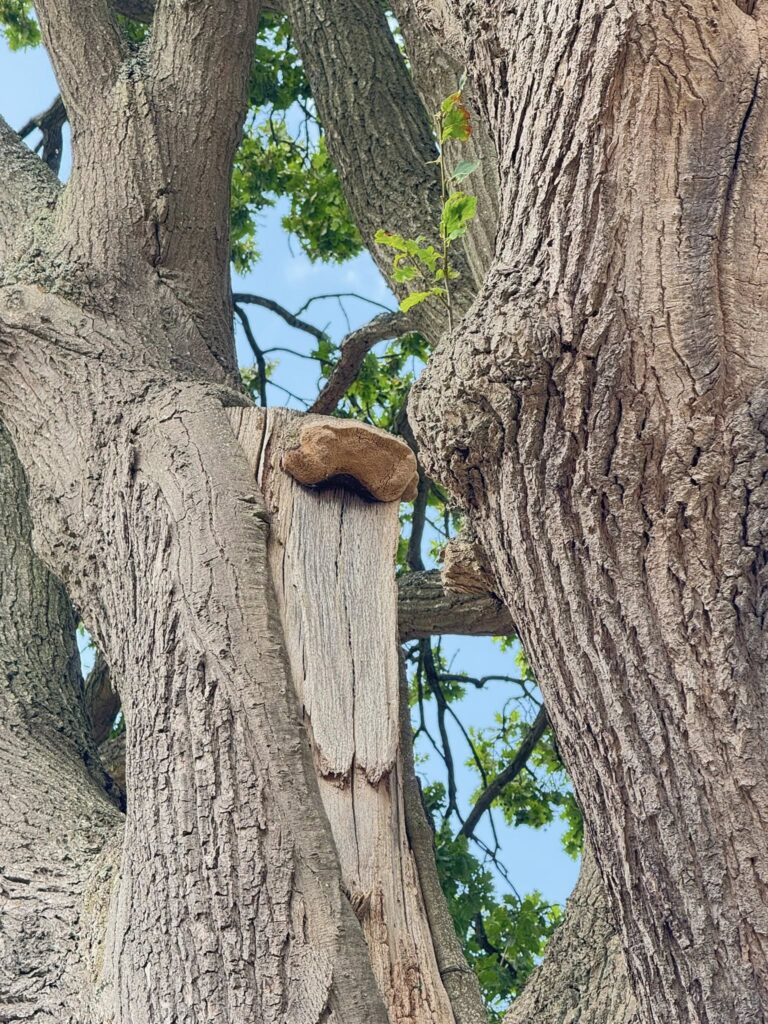
Tree failures are rarely completely without warning — but the signs are not always obvious to the untrained eye. Internal decay, root damage, structural weakness, and fungal infection can all compromise a tree long before it becomes visibly hazardous.
The consequences of a tree failure can be serious — personal injury, property damage, and significant legal and financial liability. A professional risk assessment gives you the evidence you need to act proportionately, document your duty of care, and retain valuable trees with confidence.
If you are unsure about a tree on your land, the safest and most cost-effective step is a professional assessment.
Concerned About A Tree On Your Land?
Don’t wait for a problem to develop. A professional risk assessment gives you clarity, confidence and legal protection.
07870602501
Inspection frequency depends on the tree species, condition, location, and the level of public access. As a general guide, trees in publicly accessible areas should be inspected at least every one to three years. High-risk specimens or those showing signs of decline may require more frequent monitoring. We can recommend an appropriate inspection regime as part of your assessment.
Yes. A formal, written risk assessment provides documented evidence that you have met your duty of care — which is valuable in the event of an insurance claim, legal dispute, or incident investigation. Our reports are prepared to professional standards and are suitable for use in legal and insurance contexts.
Not necessarily — but it depends on whether the tree is protected by a Tree Preservation Order (TPO) or located within a Conservation Area. Emergency works to remove an immediate danger may be carried out without consent in some circumstances, but we strongly recommend seeking advice before any works take place. We can guide you through the process.